
Tags
Synthetic Japan Passport Generator for APAC KYC Testing
Expanding your digital services into the Asian market requires highly localized verification strategies. Use our specialized KYC generator to create highly accurate Japanese passport test data. This tool is specifically engineered to train your AI models on complex double-byte character extraction and ensure compliance with strict APAC regional regulations.
Mastering Double-Byte Character OCR in Identity Systems
Japanese identity documents present one of the most formidable challenges for western-centric verification systems. The primary hurdle is the seamless integration of Romaji (Latin characters) alongside traditional Kanji, Hiragana, and Katakana. Standard OCR engines, trained predominantly on Latin alphabets, frequently hallucinate or misread these dense typographic layouts, leading to high False Rejection Rates (FRR) during onboarding.
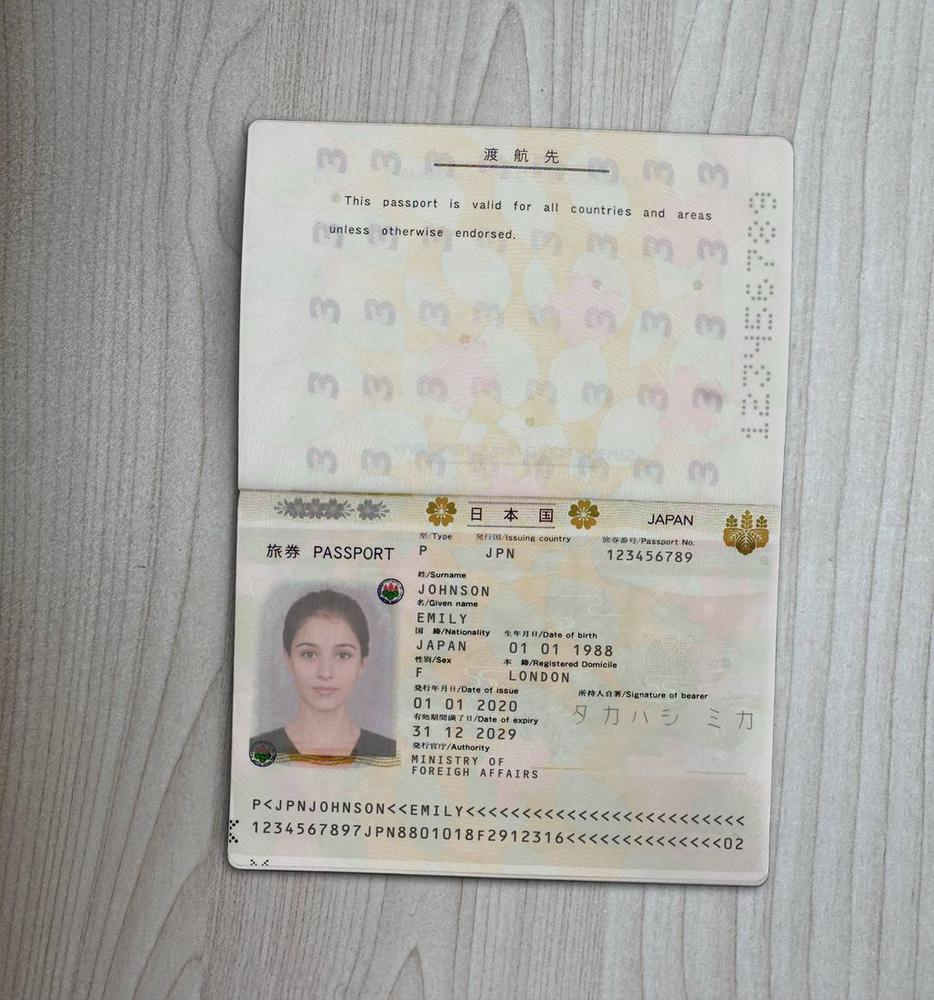
This generator produces structurally precise Japanese passports that mirror the exact layout used by the Ministry of Foreign Affairs of Japan. By utilizing this tool, developers can rigorously test their OCR engines' ability to handle complex typography, localized name formatting, and specific date structures (like the Emperor era calendar conversions, if applicable to your backend logic) without any accuracy degradation. It provides a safe, scalable way to train machine learning models for the Japanese demographic.
APAC Localization & Extraction Tests
- Cross-Lingual Data Extraction: Train your AI to accurately map complex Japanese names to their mandatory MRZ Romaji equivalents, ensuring data consistency across your database.
- Regional Compliance Validation: Benchmark your system against the strict data handling and verification requirements mandated by the Japanese Financial Services Agency (FSA).
- High-Fidelity Demographic Training: Generate diverse demographic profiles to eliminate racial, age, and regional bias in your biometric facial recognition models.
Advanced Generator Capabilities
Beyond specific regional layouts, our KYC generator is powered by a robust engine designed to produce highly realistic, standards-compliant testing artifacts. We understand that modern verification systems don't just look at the text—they analyze the digital footprint and structural mathematics of the document.
1. Cryptographically Valid MRZ Generation
For documents that support it (like passports and certain national IDs), our system doesn't just generate random characters. It utilizes the official ICAO 9303 algorithm to calculate mathematically correct Machine Readable Zones (MRZ). This ensures your backend checksum validations will pass successfully during automated testing.
2. Authentic EXIF Metadata Injection
Fraud detection systems frequently analyze photo metadata to detect tampered images. Our generator automatically injects realistic EXIF data (including simulated camera models, focal lengths, and GPS coordinates if required) into the output files, helping you test your system's deep-file inspection routines.
3. Customizable Environmental Backgrounds
To train your edge-detection and document-cropping algorithms, documents shouldn't be presented on a flat white canvas. Our tool allows you to overlay the generated ID onto various realistic backgrounds (wooden tables, bedsheets, holding hands) to simulate genuine user photo uploads.

Frequently Asked Questions
Q: Can this generator truly improve OCR accuracy for Asian characters?
A: Yes. The biggest hurdle in training OCR for Japanese IDs is the lack of diverse training data. Our tool provides limitless variations of Japanese names and layouts to solve this data deficit.
Q: Is the generated MRZ compliant with Japanese issuing standards?
A: The tool strictly adheres to ICAO 9303 standards, mirroring the exact algorithmic structure and country code ('JPN') used by the Japanese government.
Q: Why use synthetic Japanese passports instead of real anonymized data?
A: Acquiring real test data in Japan is extremely difficult and legally risky due to strict privacy laws like the Act on the Protection of Personal Information (APPI). Synthetic generation is the only fully legally compliant way to scale testing.